In conclusion, using baking soda and vinegar to unclog a toilet is a valuable, practical skill for any homeowner. It exemplifies a clever application of basic chemistry to solve a mundane yet vexing problem. While it cannot replace the plunger or plumber for serious obstructions, it serves as an outstanding first response: safe for your family, gentle on your pipes, kind to the environment, and astonishingly effective on the soft, organic clogs that represent the vast majority of household toilet backups. Before you reach for a harsh chemical or call a professional, it is always worth letting the fizz do its work.
A clogged toilet is a universal household problem, capable of inspiring immediate frustration and a dash of panic. The instinctive response is often to reach for a plunger or a bottle of harsh, chemically aggressive drain cleaner. However, there exists a gentler, more environmentally friendly, and surprisingly effective first line of defense, likely already sitting in your kitchen pantry: baking soda and vinegar. While not a solution for every catastrophic blockage, the chemical reaction between these two common household staples offers a safe, economical, and surprisingly powerful method for clearing minor to moderate toilet clogs. using baking soda and vinegar to unclog toilet
Executing this method correctly is key to its success. Begin by removing as much excess water from the toilet bowl as possible, leaving only the water sitting just above the drain opening. This prevents immediate dilution of the reaction. Next, pour one cup of baking soda directly into the drain hole. Follow this slowly with two cups of white vinegar. The moment the vinegar hits the baking soda, a vigorous fizz will erupt. Allow this reaction to work for at least 30 minutes, or ideally overnight for stubborn clogs. During this time, the expanding gas works its way around the blockage. Finally, flush the toilet. If the water drains smoothly, the clog has been cleared. For best results, chase the flush with a pot of hot (but not boiling) water to help dissolve any lingering residue. In conclusion, using baking soda and vinegar to
Of course, this method is not a panacea. Its limitations must be understood to avoid false hope. Baking soda and vinegar are ineffective against solid, non-organic obstructions like a child’s toy, a fallen toothbrush, or a dense “flushable” wipe that has swelled and hardened. For these “mechanical” clogs, the gentle fizzing of carbon dioxide is no match for the brute force of a flange plunger or the snake-like reach of a toilet auger. Similarly, a complete sewer line blockage or a clog deep within the plumbing system will not be resolved by a reaction happening in the bowl. In these cases, the fizz will simply bubble up harmlessly, and professional intervention will be required. Before you reach for a harsh chemical or
The effectiveness of this method lies in simple chemistry. Baking soda (sodium bicarbonate) is a mild base, while vinegar (acetic acid) is a weak acid. When combined, they undergo an acid-base reaction that produces carbon dioxide gas. In the confined space of a toilet drain, this rapid release of gas creates a vigorous fizzing action—thousands of tiny bubbles expanding and agitating the water. This physical force can effectively break up and dislodge soft blockages, such as those composed of toilet paper, soap scum, and organic waste. Unlike the corrosive heat or toxic fumes of chemical drain openers, this reaction is non-caustic and safe for porcelain and PVC pipes, making it an ideal first attempt before resorting to more aggressive tools or chemicals.
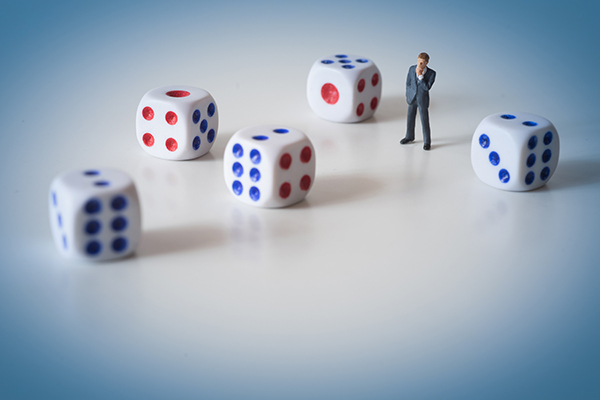
Probability calculations that can be used to inform decisions and manage risk can be very complicated. This unit is designed to help build your foundational understanding of probability and introduce you to some of the techniques that are used to calculate very difficult probabilities. You will continue to work with the Games Fair interactive tool and be exposed to real world situations to start to realize the impact of probability in your world.
The focus of this unit is on Probability Distributions. You will learn how to display all of the outcomes of a probability situation in a table and a bar graph. You will learn some formulas that will work with some situations. A large part of the unit will be calculating the expected value, or average, of a probability situation. The Games Fair Interactive tool will be used throughout the unit and will provide a focus for the summative and lead up to the Culminating Assignment, the Games Fair.
Probability calculations that can be used to inform decisions and manage risk can be very complicated. This unit is designed to help build your foundational understanding of probability and introduce you to some of the techniques that are used to calculate very difficult probabilities. You will continue to work with the Games Fair interactive tool and be exposed to real world situations to start to realize the impact of probability in your world.
After much work to collect valid and reliable information in the form of statistics, you will learn to analyse the statistics to make conclusions that can help make decisions. You will explore one real and two variables statistics using the World Map Interactive tool. A data set used will include a perceived quality of Health Care across Canada. The unit summative will be require you to act as a consultant for a large Canadian franchise to help them make a decision.

In Unit 3 of this course, you demonstrated how to represent the distribution of a discrete random variable. This unit will look at the distribution of continuous random variables and how they are compared to discrete variables. In the third and fourth activity, you will be introduced to what may be the most important mathematical function: the normal distribution.
In this unit, you will consolidate the concepts and skills you have learned throughout this course. You will complete the course culminating activity, through which you will analyze the impacts of energy transformation technologies on society and the environment.