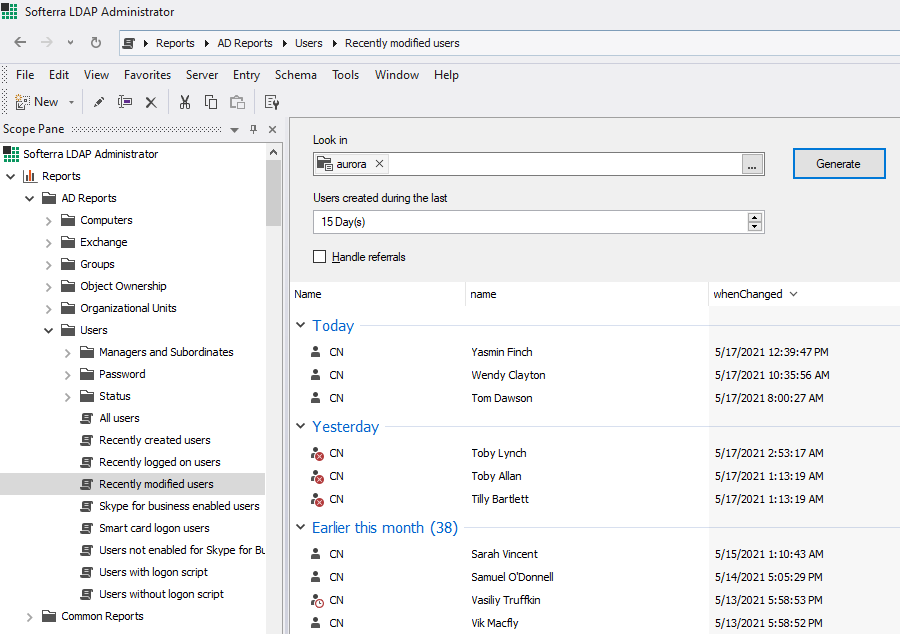
LDAP Administrator allows you to manage multiple directories with ease. Quick navigation, handy attribute editors, bulk object modification, and plenty of other features provide for an intuitive and efficient LDAP server management experience.
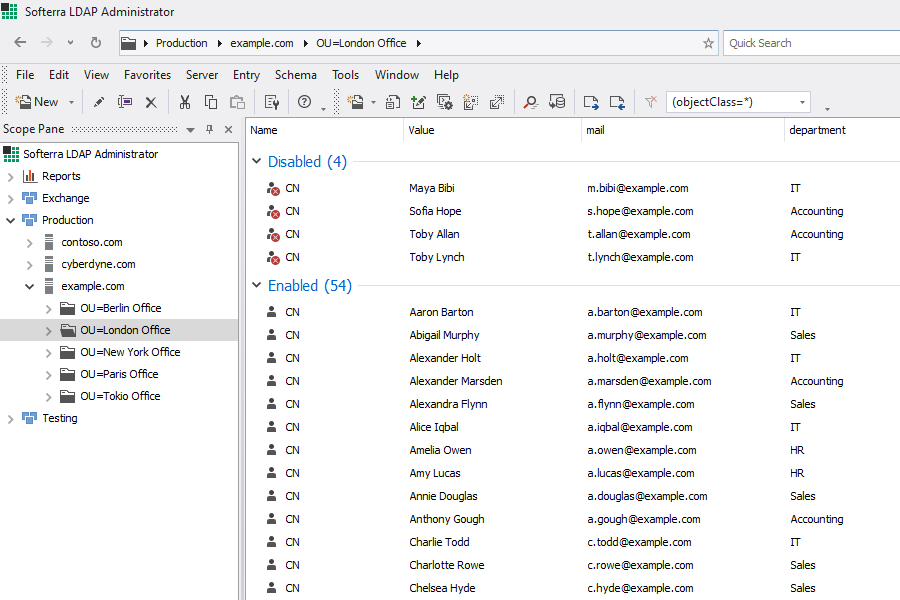
LDAP Administrator provides full support of LDAPv2 and LDAPv3 protocols and allows working with virtually any LDAP server: OpenLDAP, Netscape/iPlanet, Novell eDirectory, Oracle Internet Directory, Lotus Domino, Microsoft Active Directory, CA Directory, Siemens DirX, and others.
LDAP Administrator offers a solid reporting platform that facilitates the analysis and monitoring of LDAP directories. Besides a number of built-in reports, you can create custom reports to cover any scenario.
| Error | Likely Fix | |-------|-------------| | Access denied | Run PowerShell as Administrator, or use -Credential with domain admin rights | | WinRM cannot process the request | Enable-PSRemoting -Force on the remote machine (or via GPO) | | Get-BitLockerVolume not found | The remote machine doesn't have BitLocker installed (Home edition) or the module isn't loaded | | No KeyProtector found | BitLocker is suspended or the key is stored in TPM only (no recovery password) | The Better Way: Active Directory Module If your organization stores BitLocker keys in AD (via GPO: "Store BitLocker recovery information in AD DS" ), you don't even need the remote computer to be online:
catch [PSCustomObject]@Computer=$pc; RecoveryKey=$null; Status="Failed: $ " powershell get bitlocker recovery key remote computer
Do you pull keys from AD, Entra ID, or directly from the remote client? Drop your favorite one-liner in the comments below. Keep scripting, and stay secure. | Error | Likely Fix | |-------|-------------| |
This works even if the PC is dead or offline. Use this method when possible. Don't wait for a boot-loop emergency to figure this out. Test Method 1 on a lab machine today. Better yet, script Method 3 into a weekly audit report so you always know where your recovery keys are. This works even if the PC is dead or offline
PowerShell is your best friend.
Add | Export-Csv -Path "C:\Reports\BitLockerKeys.csv" -NoTypeInformation to save to a secure file. Method 3: Batch Mode – Get Keys from Multiple Computers Let’s say you have a text file with 20 computer names. Loop through them: