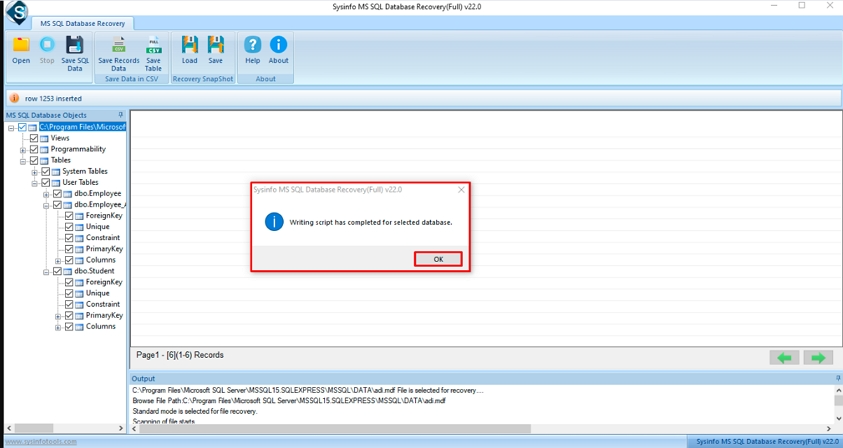
SQL Database Recovery software is a reliable solution to Fix suspect SQL databases
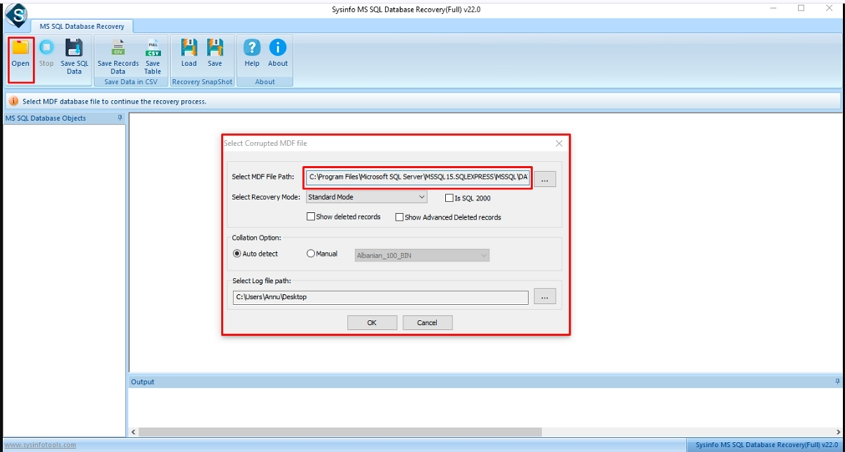
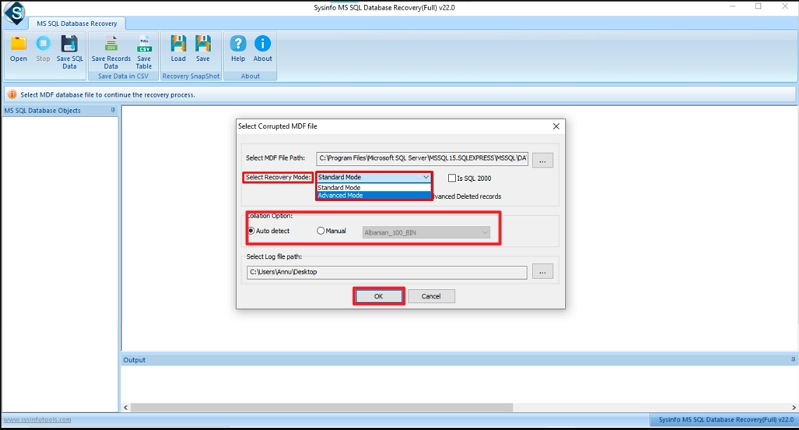
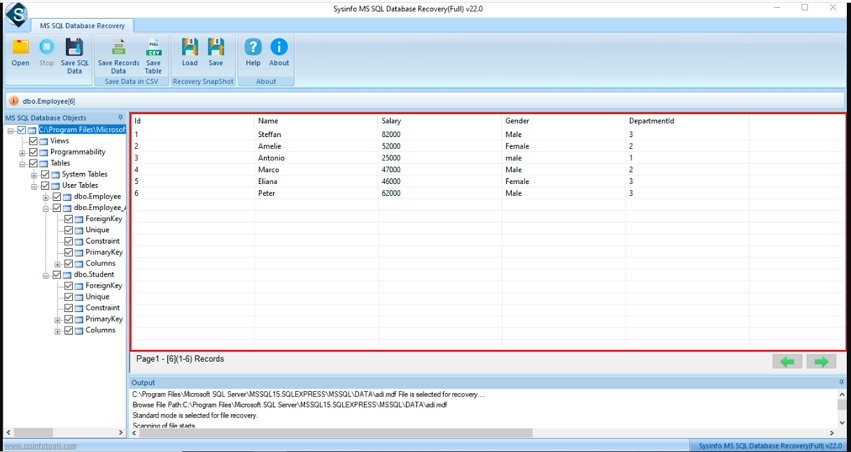
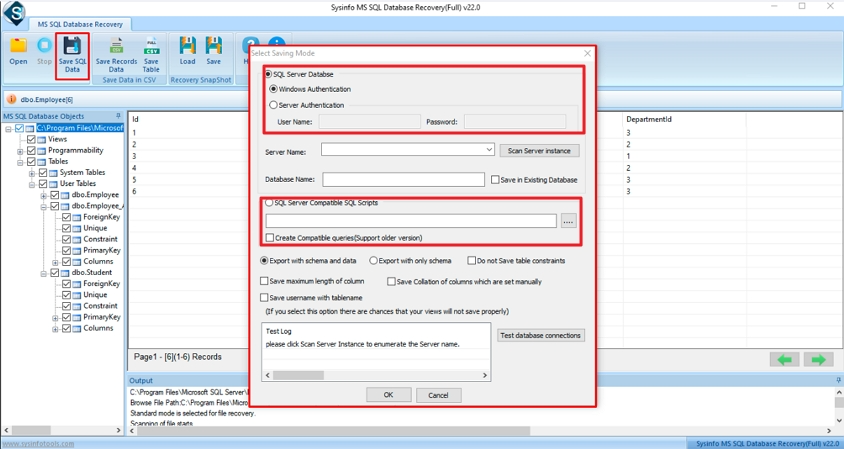
Corruption can lead to inaccessibility on the database files, and they are tagged as suspect. To repair SQL database files, a reliable recovery solution is mainly needed. This recovery software can perform SQL Server recovery with utmost accuracy and restore SQL database contents. Also, it supports recovery from NDF file, a secondary database file of SQL Server. Moreover, all the recovered data can be saved into an MS SQL database file or in the form of SQL Script.
Free Download  Purchase NowHowever, the ocaso of old mediators does not signal the end of mediation itself. Rather, it signals a mutation. The future belongs to a new breed of "trust curators." In a world drowning in data, the valuable mediator is no longer the one who controls access , but the one who reduces noise . This is why review aggregators, fact-checking consortiums, and AI-powered recommendation engines are ascendant. The role shifts from a gatekeeper (who blocks entry) to a guide (who clarifies complexity). The successful modern mediator is transparent, verifiable, and often decentralized—think of open-source software or blockchain oracles.
Historically, mediators solved the problem of scarcity and asymmetry. A bank had access to capital that a borrower lacked; a publisher had a printing press that a writer could not afford. Their power stemmed from controlling a bottleneck in the value chain. Yet, the internet is a native ecosystem of abundance. When any user can publish a blog post, list a spare room for rent, or transfer cryptocurrency without a bank, the economic logic of the traditional broker collapses. Platforms like Airbnb or Uber are often mistakenly called "disintermediators," but they represent a new paradox: they are hyper-efficient centralizers that replace a thousand small mediators (hotel clerks, taxi dispatchers) with a single algorithm. In doing so, they accelerate the ocaso of the human, trust-based intermediary.
For centuries, the flow of information, goods, and services relied on a stable cast of characters: the editor who decided what was news, the travel agent who booked your voyage, the retail buyer who chose which products sat on a shelf. These figures, the traditional mediators, were the gatekeepers of access and quality. However, we are currently witnessing their ocaso —a Spanish term that evokes not a sudden death, but a slow, inevitable twilight. The digital revolution has not merely changed the speed of transactions; it has fundamentally eroded the structural necessity of the classical intermediary, replacing vertical authority with horizontal, peer-based networks.
In conclusion, the ocaso de los mediadores tradicionales is not a tragedy but a structural adjustment. We are mourning the loss of a stable, hierarchical, and paternalistic system of trust. Yet, in its place, we are building a chaotic, dynamic, and participative model. The twilight of the old gatekeepers is the dawn of the individual curator. The question that remains—whether algorithms, crowds, or decentralized protocols will inherit the mantle of trust—is the defining challenge of our post-mediator age.
The most profound collapse has occurred in the realm of information. The journalist was the archetypal mediator, filtering raw events into curated news. Now, social media algorithms mediate the news, but they do so without professional ethics or a mandate for truth—only engagement. This twilight has led to the "disintermediation of reality," where the influencer replaces the critic, and the viral tweet replaces the investigative report. While this democratizes voice, it also fragments authority, leading to epistemic chaos. We are left without a shared canon of mediators, resulting in a polarized world where everyone is a broadcaster and no one is a trusted editor.
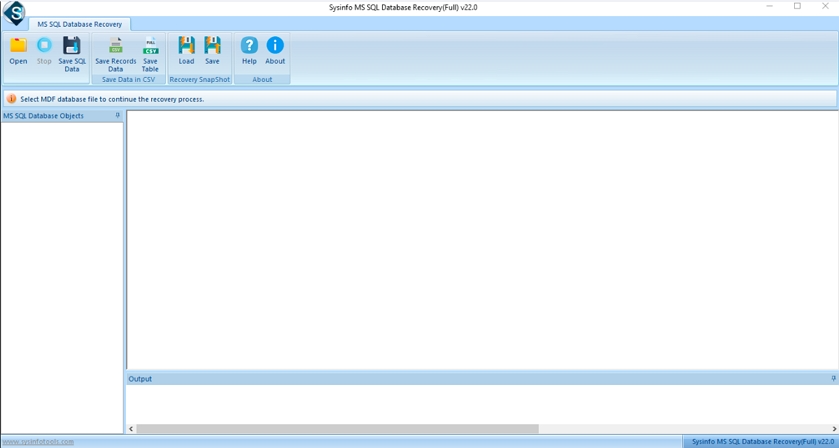
| Version: | 24.08 |
| Size: | 1.8 MB |
| Language: | English |
| Edition: | Single, Admin, Technician & Enterprise |
| Processor: | Intel® Core™2 Duo E4600 Processor 2.40GHz |
| RAM: | 8 GB (16 GB Recommended) |
| Hard Drive: | 512 MB |
| Supported Windows: | 11, 10/8.1/8/7/, 2008/2012 (32 & 64 Bit), and other Windows versions. |
Useful Links-
Get an Overview of SQL Database Recovery Tool for Free & Full Version.
| Features Available | Demo Version | Full Version |
|---|---|---|
| Repair Files of All SQL Versions | ||
| Offer Dual SQL Recovery Mode | ||
| SQL ROW-Compression & PAGE Compression | ||
| Repair corrupt SQL Database | ||
| Save recovered files | Only Preview | |
| 24*7 Technical Support | ||
| Supports All the Windows Version | ||
| Download and Purchase | Download | Purchase |
However, the ocaso of old mediators does not signal the end of mediation itself. Rather, it signals a mutation. The future belongs to a new breed of "trust curators." In a world drowning in data, the valuable mediator is no longer the one who controls access , but the one who reduces noise . This is why review aggregators, fact-checking consortiums, and AI-powered recommendation engines are ascendant. The role shifts from a gatekeeper (who blocks entry) to a guide (who clarifies complexity). The successful modern mediator is transparent, verifiable, and often decentralized—think of open-source software or blockchain oracles.
Historically, mediators solved the problem of scarcity and asymmetry. A bank had access to capital that a borrower lacked; a publisher had a printing press that a writer could not afford. Their power stemmed from controlling a bottleneck in the value chain. Yet, the internet is a native ecosystem of abundance. When any user can publish a blog post, list a spare room for rent, or transfer cryptocurrency without a bank, the economic logic of the traditional broker collapses. Platforms like Airbnb or Uber are often mistakenly called "disintermediators," but they represent a new paradox: they are hyper-efficient centralizers that replace a thousand small mediators (hotel clerks, taxi dispatchers) with a single algorithm. In doing so, they accelerate the ocaso of the human, trust-based intermediary.
For centuries, the flow of information, goods, and services relied on a stable cast of characters: the editor who decided what was news, the travel agent who booked your voyage, the retail buyer who chose which products sat on a shelf. These figures, the traditional mediators, were the gatekeepers of access and quality. However, we are currently witnessing their ocaso —a Spanish term that evokes not a sudden death, but a slow, inevitable twilight. The digital revolution has not merely changed the speed of transactions; it has fundamentally eroded the structural necessity of the classical intermediary, replacing vertical authority with horizontal, peer-based networks.
In conclusion, the ocaso de los mediadores tradicionales is not a tragedy but a structural adjustment. We are mourning the loss of a stable, hierarchical, and paternalistic system of trust. Yet, in its place, we are building a chaotic, dynamic, and participative model. The twilight of the old gatekeepers is the dawn of the individual curator. The question that remains—whether algorithms, crowds, or decentralized protocols will inherit the mantle of trust—is the defining challenge of our post-mediator age.
The most profound collapse has occurred in the realm of information. The journalist was the archetypal mediator, filtering raw events into curated news. Now, social media algorithms mediate the news, but they do so without professional ethics or a mandate for truth—only engagement. This twilight has led to the "disintermediation of reality," where the influencer replaces the critic, and the viral tweet replaces the investigative report. While this democratizes voice, it also fragments authority, leading to epistemic chaos. We are left without a shared canon of mediators, resulting in a polarized world where everyone is a broadcaster and no one is a trusted editor.
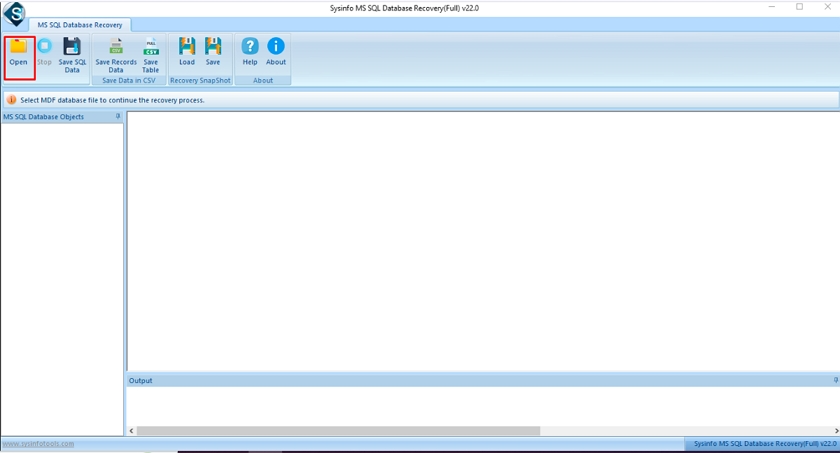
What Client Says about SQL Database Recovery?
Verified Customer Feedback of using this tool.
My SQL Database file was corrupted due to a virus in my system. Also, I lost all my valuable data. I was worried, then one of my friends suggested SQL Recovery Tool. I used this tool to repair my corrupt file and found it helpful..
- Patrick Simron
Due to this recovery tool, now i have the choice to fix and save the recovered data either as SQL Server Database or as SQL Server Scripts. You can also use this tool if you want to repair a corrupted SQL file.
- Aaron Macht
This tool helped me to fix MDF and NDF files of SQL Server Database efficiently and also recovered lost data from the corrupted files without taking too much time.
- Alice Markle