matcha fae

Mining engineers have trusted DRAGSIM for decades to make informed operational decisions, obtaining practical productivity and production cost data with speed and precision. DRAGSIM’s fully auditable functionality makes it a great fit for your company’s governance platform; you too can trust it to deliver accuracy and reliability from the pit to the boardroom.

Features

Fae - Matcha

To drink matcha as a Matcha Fae is to declare that even the smallest daily act can be a portal. The steam rising from the bowl is the breath of the mound-dwellers. The froth is the foam on a forest stream. And the bitter, grassy taste is the flavor of being truly present—alert, awake, and just a little bit enchanted. In a world screaming for your clicks, the Matcha Fae whispers: Sit down. Whisk. Breathe. Be green.

Sociologically, this mirrors the broader "slow movement" reaction against hustle culture. The Matcha Fae is frequently a knowledge worker—a writer, designer, or remote coder—who uses the tea ritual as a boundary between the digital and the physical. The whisk becomes a fidget toy for the soul; the bowl, a screen-free portal. The "Fae" (or Fey) component is crucial. It invokes the folklore of fairies not as Tinkerbell-like pixies, but as the older, more dangerous Celtic Aos Sí —beings of the mound who exist parallel to humans, beautiful but amoral, prone to tricks, and deeply tied to specific trees, streams, and stones.

Furthermore, there is the question of cultural appropriation. The aesthetic borrows heavily from Japanese tradition without always acknowledging its spiritual or historical roots. A thoughtful Matcha Fae will educate herself on the origins of chanoyu , credit Japanese artists, and distinguish between appreciation and superficial "Zen-washing." Paradoxically, the Matcha Fae thrives on social media while ostensibly rejecting it. The hashtag #matchafae has thousands of posts, each a quiet tableau of tea and shadow. These images function as what media scholar Nathan Jurgenson calls "digital dualism"—performing analog authenticity online. matcha fae

This is the : You cannot perform non-materialism without materials. The Matcha Fae navigates this tension by emphasizing care over collection . She owns few things, but each thing is used daily and repaired lovingly. A chipped bowl is not trash; it is kinstugi (golden repair) potential.

In the sprawling taxonomy of internet aesthetics, where "Cottagecore" champions rustic self-sufficiency and "Goblincore" celebrates the grotesque beauty of decay, a quieter, more caffeinated archetype has emerged: the Matcha Fae . Neither a full-blown subculture nor a simple dietary preference, the Matcha Fae is a hybrid identity—part ethereal forest spirit, part meticulous urban minimalist. It is an aesthetic philosophy that uses the ritual of matcha (powdered green tea) as a talisman against the noise of modernity, weaving together threads of Japanese tea ceremony, slow living, digital detox, and a distinctly feminine, nature-bound whimsy. To drink matcha as a Matcha Fae is

To be a Matcha Fae is not merely to drink green tea; it is to inhabit a state of suspended animation where time slows to the pace of a whisk stroking through jade-colored liquid. At its most literal level, the Matcha Fae aesthetic is dictated by a specific, non-negotiable color palette: shades of matcha green. This ranges from the pale, almost yellow-green of usucha (thin tea) to the deep, nearly blue-jade of ceremonial grade koicha (thick tea). Unlike the neon vibrancy of cyberpunk or the muted sage of traditional cottagecore, matcha green is complex. It implies bitterness balanced by sweetness, alertness tempered by calm (due to L-theanine).

This ritual is borrowed (and often loosely adapted) from the Japanese tea ceremony ( chanoyu ). However, the Matcha Fae secularizes the practice. For her, the ritual is not Zen Buddhism per se, but . In a high-velocity attention economy, the four minutes required to prepare matcha become a revolutionary act. She is not wasting time; she is reclaiming it. And the bitter, grassy taste is the flavor

Yet, within this contradiction lies a genuine community. For those suffering from anxiety, chronic illness, or burnout, the Matcha Fae offers a template for a manageable, sensory-rich life. One cannot solve global capitalism, but one can control the temperature of one's water. One cannot make the world less loud, but one can focus on the sound of bamboo on ceramic. The Matcha Fae is not a fleeting trend. It is a coping mechanism dressed in linen, a prayer whispered over a steaming bowl. In an era defined by fragmentation, it insists on a single, sustained act of attention. It marries the forest's wild heart (the Fae) with the discipline of human craft (matcha).


matcha fae

Advanced analytics

Powerful reporting with inbuilt reports.

matcha fae

Industry standard

Trusted dragline solution for over 40+ years.

matcha fae

Drive continuous improvement

Validate planned vs actual.

matcha fae

Support your decisions

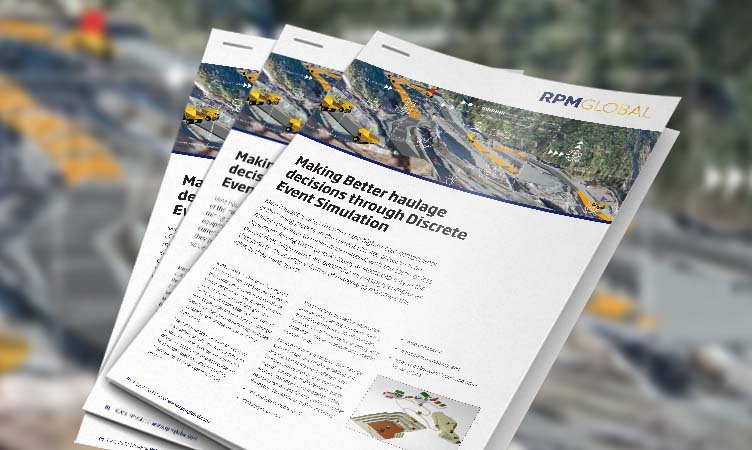
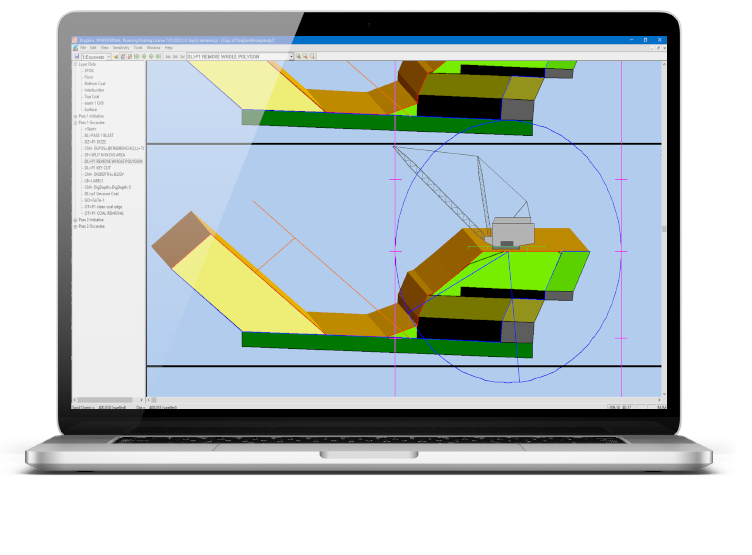
DRAGSIM is a dragline simulation system designed to optimise equipment productivity and waste movement to provide complete confidence in your decisions using the DRAGSIM decision support capability.

Method validation

By reproducing dragline methods across a range of operational parameters, and incorporating blasting, waste stripping and other mining equipment into the analysis, DRAGSIM gives users an accurate picture of dragline operations for a best-practice approach.

Evaluation of operating methods

Analyse the various segments of a cycle to identify the best and most practical method from a technical and economic perspective.

Request demo

To drink matcha as a Matcha Fae is to declare that even the smallest daily act can be a portal. The steam rising from the bowl is the breath of the mound-dwellers. The froth is the foam on a forest stream. And the bitter, grassy taste is the flavor of being truly present—alert, awake, and just a little bit enchanted. In a world screaming for your clicks, the Matcha Fae whispers: Sit down. Whisk. Breathe. Be green.

Sociologically, this mirrors the broader "slow movement" reaction against hustle culture. The Matcha Fae is frequently a knowledge worker—a writer, designer, or remote coder—who uses the tea ritual as a boundary between the digital and the physical. The whisk becomes a fidget toy for the soul; the bowl, a screen-free portal. The "Fae" (or Fey) component is crucial. It invokes the folklore of fairies not as Tinkerbell-like pixies, but as the older, more dangerous Celtic Aos Sí —beings of the mound who exist parallel to humans, beautiful but amoral, prone to tricks, and deeply tied to specific trees, streams, and stones.

Furthermore, there is the question of cultural appropriation. The aesthetic borrows heavily from Japanese tradition without always acknowledging its spiritual or historical roots. A thoughtful Matcha Fae will educate herself on the origins of chanoyu , credit Japanese artists, and distinguish between appreciation and superficial "Zen-washing." Paradoxically, the Matcha Fae thrives on social media while ostensibly rejecting it. The hashtag #matchafae has thousands of posts, each a quiet tableau of tea and shadow. These images function as what media scholar Nathan Jurgenson calls "digital dualism"—performing analog authenticity online.

This is the : You cannot perform non-materialism without materials. The Matcha Fae navigates this tension by emphasizing care over collection . She owns few things, but each thing is used daily and repaired lovingly. A chipped bowl is not trash; it is kinstugi (golden repair) potential.

In the sprawling taxonomy of internet aesthetics, where "Cottagecore" champions rustic self-sufficiency and "Goblincore" celebrates the grotesque beauty of decay, a quieter, more caffeinated archetype has emerged: the Matcha Fae . Neither a full-blown subculture nor a simple dietary preference, the Matcha Fae is a hybrid identity—part ethereal forest spirit, part meticulous urban minimalist. It is an aesthetic philosophy that uses the ritual of matcha (powdered green tea) as a talisman against the noise of modernity, weaving together threads of Japanese tea ceremony, slow living, digital detox, and a distinctly feminine, nature-bound whimsy.

To be a Matcha Fae is not merely to drink green tea; it is to inhabit a state of suspended animation where time slows to the pace of a whisk stroking through jade-colored liquid. At its most literal level, the Matcha Fae aesthetic is dictated by a specific, non-negotiable color palette: shades of matcha green. This ranges from the pale, almost yellow-green of usucha (thin tea) to the deep, nearly blue-jade of ceremonial grade koicha (thick tea). Unlike the neon vibrancy of cyberpunk or the muted sage of traditional cottagecore, matcha green is complex. It implies bitterness balanced by sweetness, alertness tempered by calm (due to L-theanine).

This ritual is borrowed (and often loosely adapted) from the Japanese tea ceremony ( chanoyu ). However, the Matcha Fae secularizes the practice. For her, the ritual is not Zen Buddhism per se, but . In a high-velocity attention economy, the four minutes required to prepare matcha become a revolutionary act. She is not wasting time; she is reclaiming it.

Yet, within this contradiction lies a genuine community. For those suffering from anxiety, chronic illness, or burnout, the Matcha Fae offers a template for a manageable, sensory-rich life. One cannot solve global capitalism, but one can control the temperature of one's water. One cannot make the world less loud, but one can focus on the sound of bamboo on ceramic. The Matcha Fae is not a fleeting trend. It is a coping mechanism dressed in linen, a prayer whispered over a steaming bowl. In an era defined by fragmentation, it insists on a single, sustained act of attention. It marries the forest's wild heart (the Fae) with the discipline of human craft (matcha).