1. Standard Tamil Keyboard Layout
High resolution image suitable for printing.
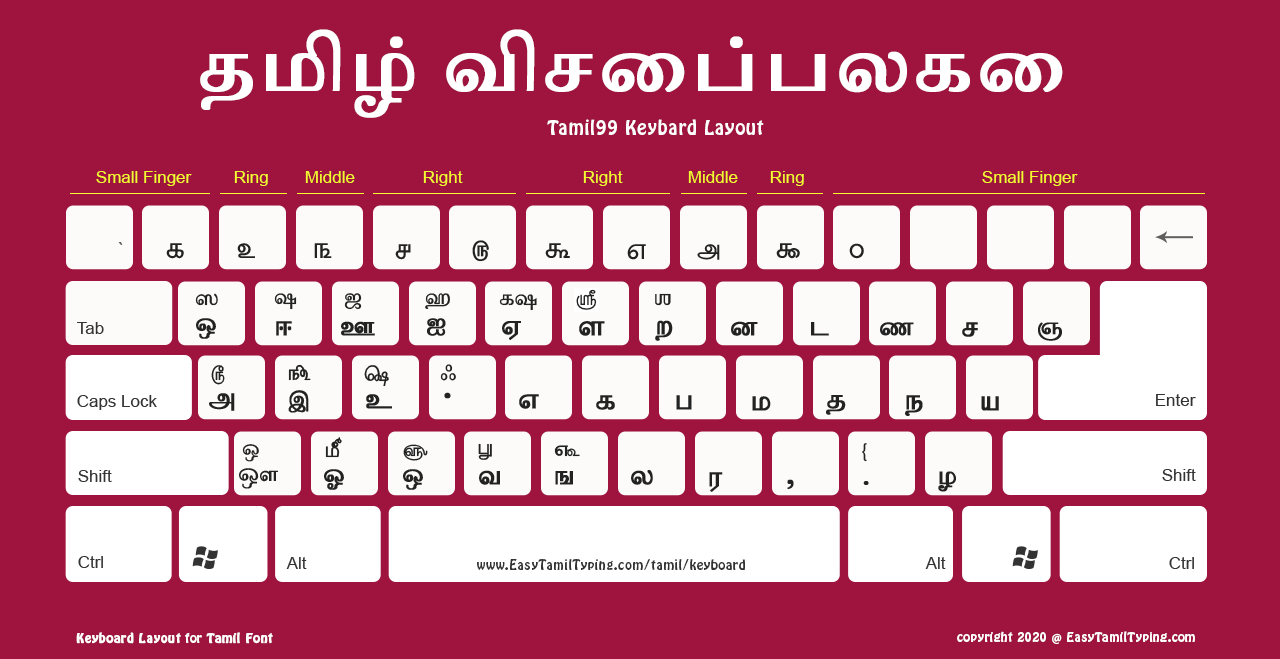
We have five different Tamil keyboard layouts for you to download on your computer. Once downloaded — you can use it as a reference to type in Tamil either on Word document or any other text editor. You also need to download the matching Tamil fonts.
High resolution image suitable for printing.
High resolution image suitable for printing.
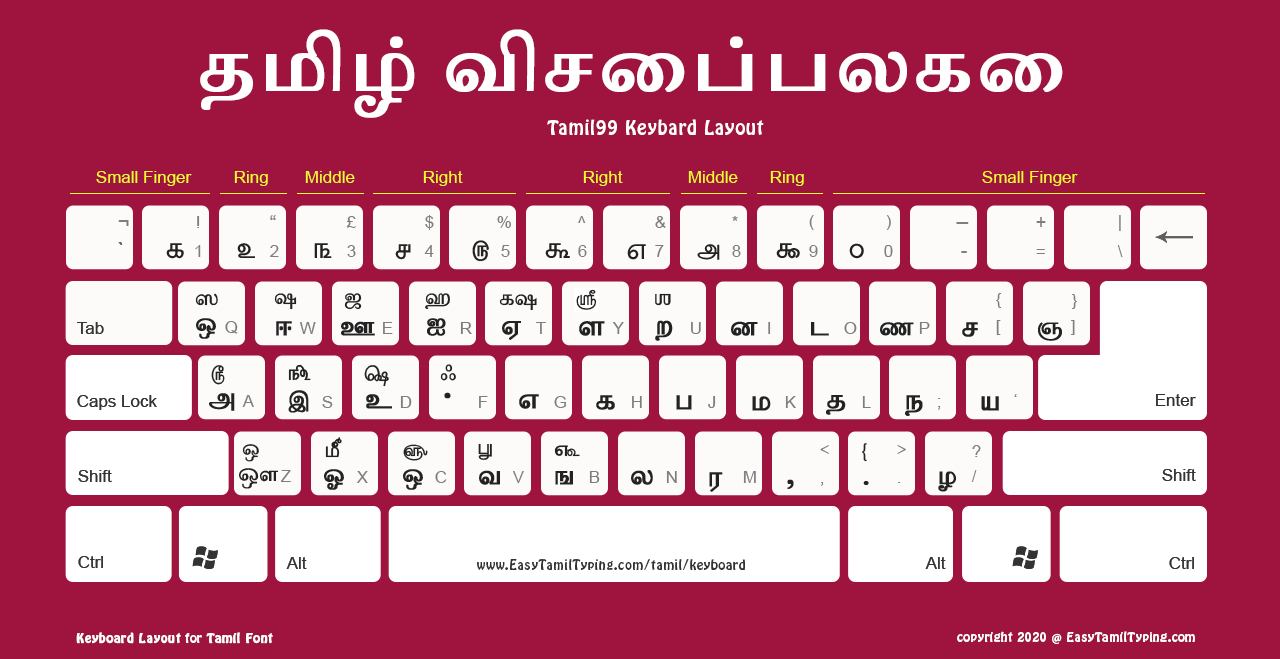
High resolution image suitable for printing.
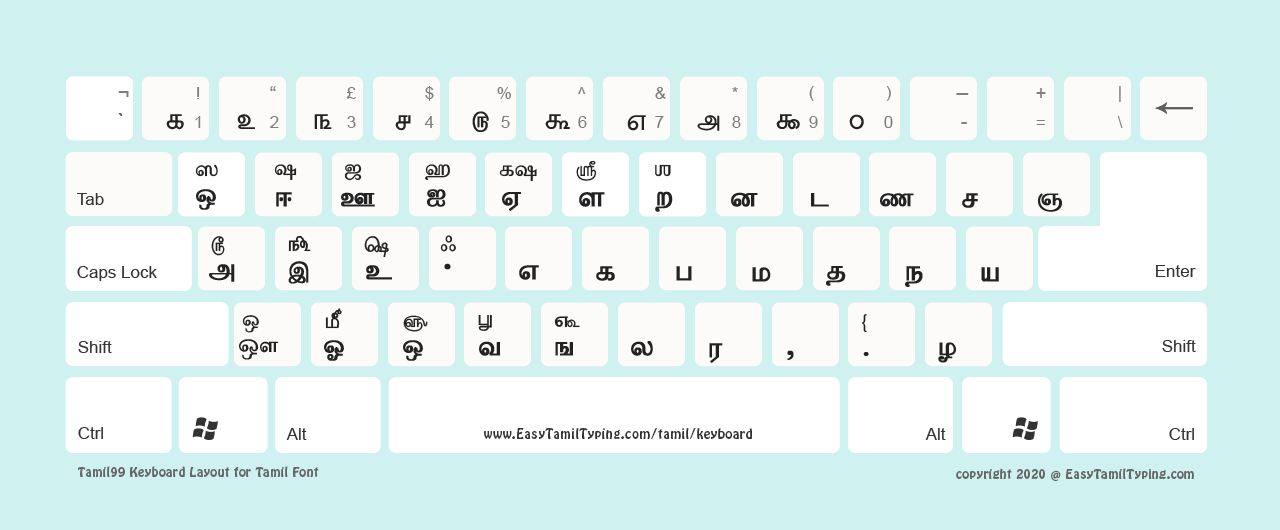
High resolution image suitable for printing.
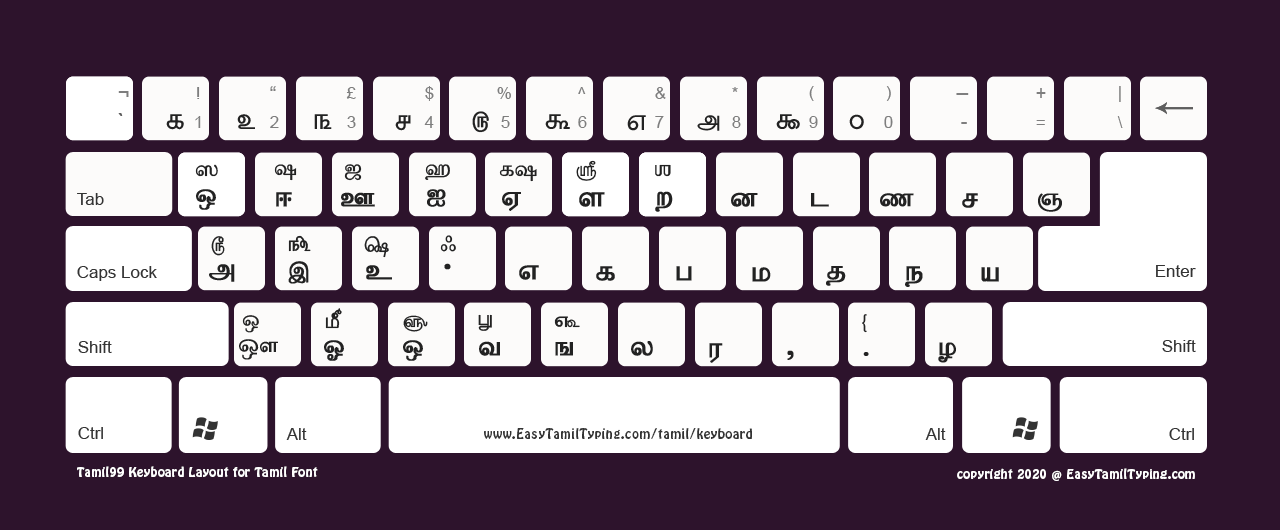
High resolution image suitable for printing.
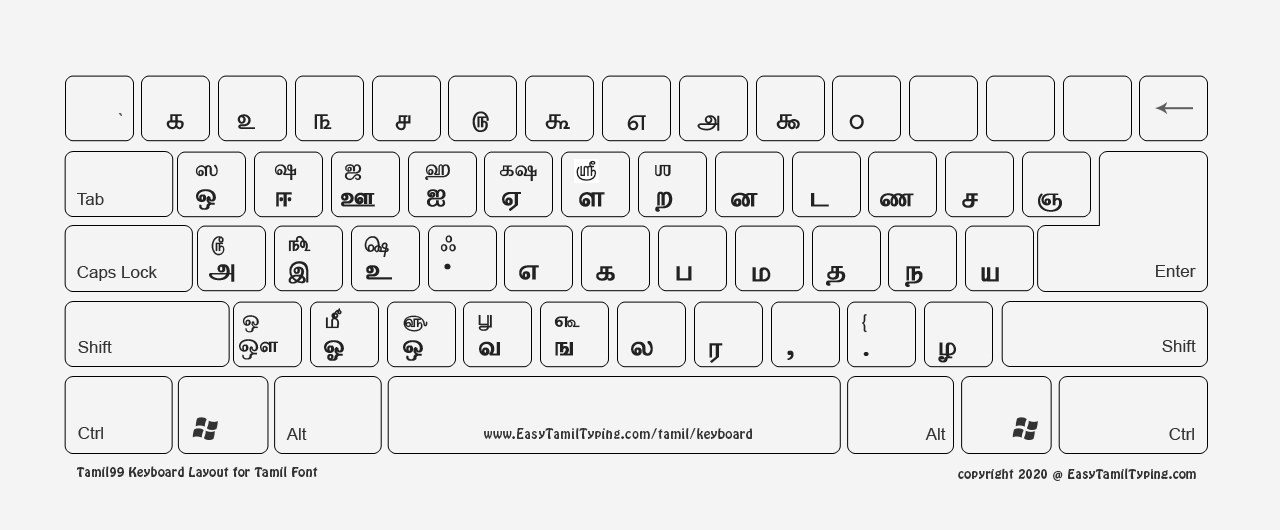
Here's our systematic approach to setting up Tamil typing.
Acquire your Tamil font — browse our curated fonts library and install the ideal typeface for your Tamil writing needs.
Obtain your keyboard reference using this reliable download process:
Click on your preferred keyboard layout from our collection
Right-click when the high-resolution image appears
Choose "Save image as..." and save to your preferred location
Establish your typing environment by opening any word processor and selecting the Tamil font you installed earlier.
Launch your Tamil writing session! Position your keyboard image for easy viewing while you compose beautiful Tamil text.
Expert recommendation: Limited screen space? Our keyboards deliver outstanding print clarity — print one for a reliable desktop reference that's always ready when you need it!
Designed for Tamil99 keyboard layout — accurately mapped to provide an authentic Tamil typing experience with correct character placement.
Meets professional standards — designed for typists, and businesses requiring error-free Tamil documentation.
Supports various display formats — perfect for presentations, reference guides, digital displays, and high-quality printing.
Offers unrestricted licensing — use freely for academic research, commercial projects, educational materials, or personal correspondence.
A slider allows users to compare current orthophotos with images from previous years (e.g., 2013, 2017, 2021). Environmentalists use this to track illegal logging or shoreline erosion. Citizens use it to prove that a neighbor’s new fence encroached on their land.
In a region where ancient trade routes, disputed boundaries, and modern infrastructure converge, the ability to see the land clearly is not just a convenience—it is a form of statecraft. For decades, detailed topographic and cadastral maps of Georgia remained locked inside government archives, accessible only to surveyors, military planners, and a handful of privileged specialists. Then came maps.gov.ge .
During the 2020 Nagorno-Karabakh war, Georgian officials discreetly used maps.gov.ge to verify that no shelling had landed on Georgian territory. International donor organizations (EU, World Bank, UNDP) now require their local partners to reference maps.gov.ge for any land-based project. Maps.gov.ge is not flashy. There are no 3D fly-throughs, no augmented reality gimmicks. What it offers is rarer and more valuable: trust . Every day, thousands of Georgians—farmers, lawyers, students, engineers, police officers—open their browsers and know that the lines on the screen match the ground beneath their feet.
From bridges and gas pipelines to schools and polling stations, the portal layers critical infrastructure. During the 2023 heavy floods in Racha region, emergency services used maps.gov.ge to identify vulnerable settlements, plan evacuation routes, and coordinate road-clearing crews.
The breakthrough came in the 2010s, when Georgia launched a systematic land registration reform. The NAPR began digitizing hundreds of thousands of paper cadastral records. But the real leap was the decision to publish them online, for free, without login walls. By 2016, maps.gov.ge had become a fully interactive, multilingual portal.
 Sambhu Raj Singh ·