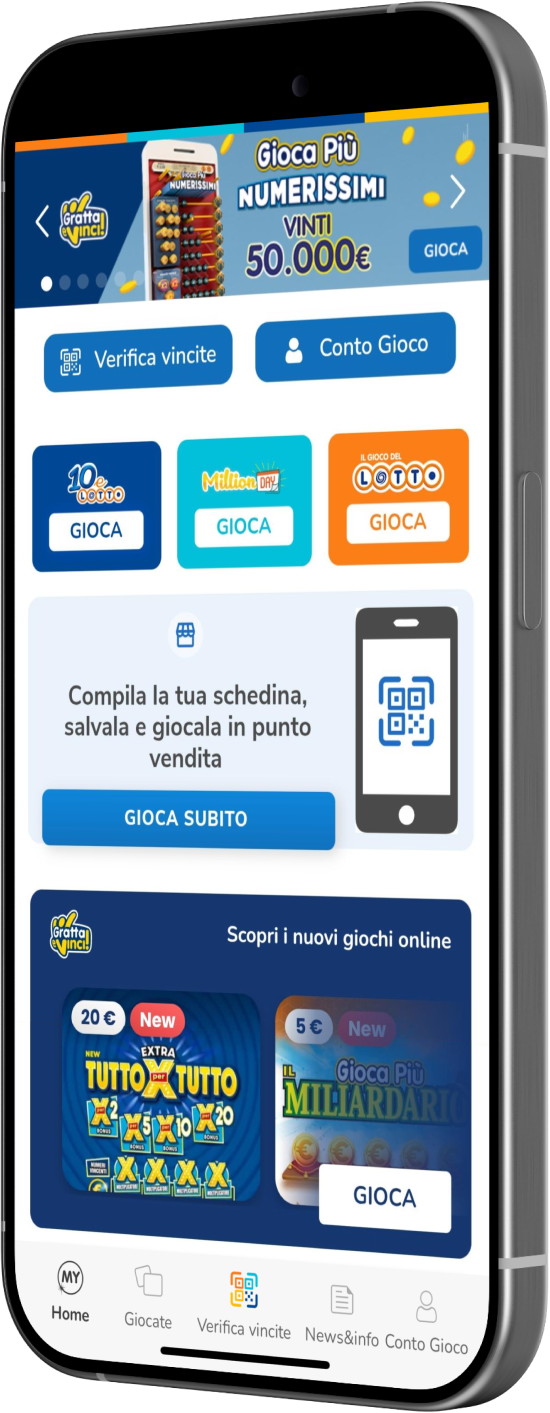
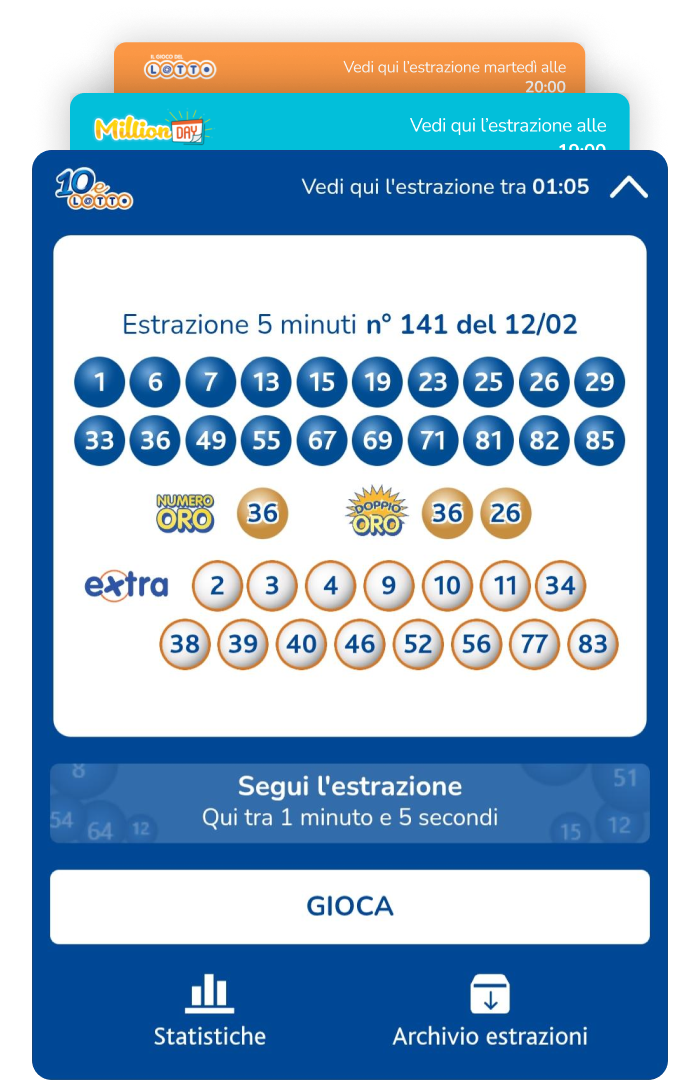
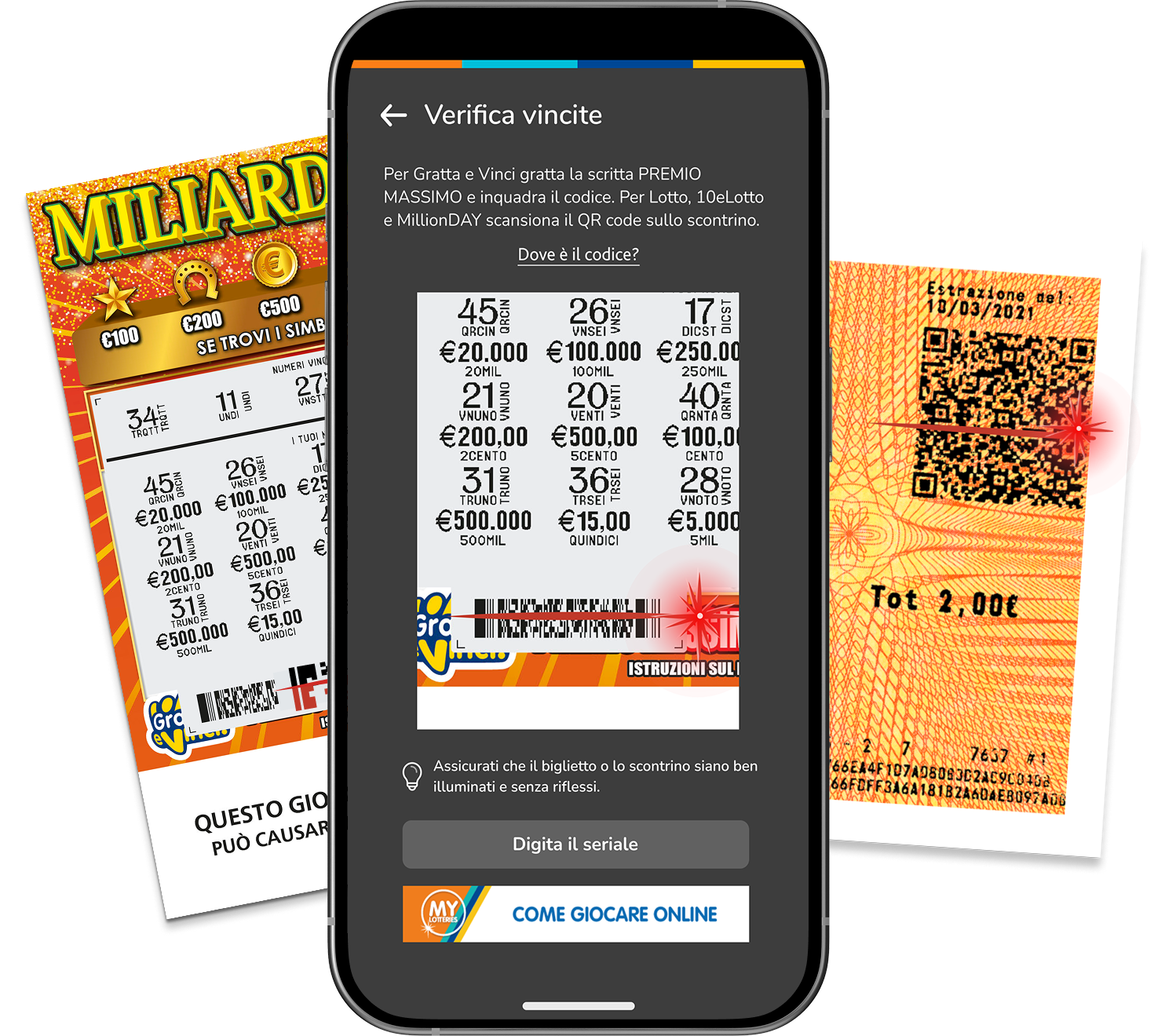
Con l’app ufficiale Lotto e Gratta e Vinci puoi verificare le
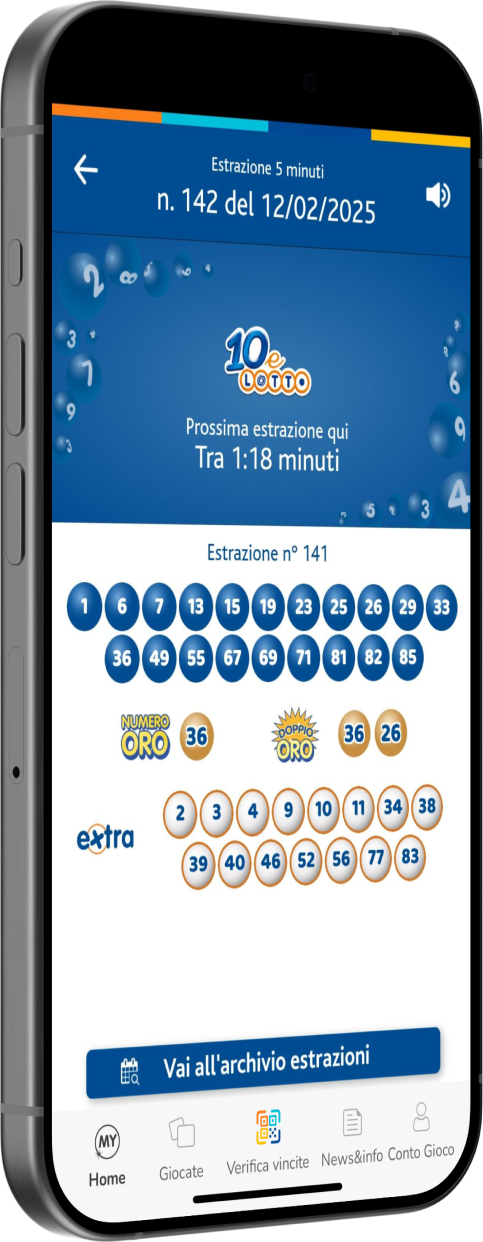
vincite, seguire le estrazioni in diretta e giocare on line
Scarica subito la nuova app!
Scarica subito la nuova app!
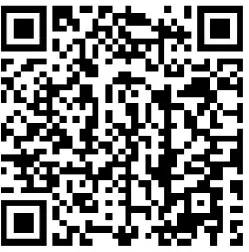
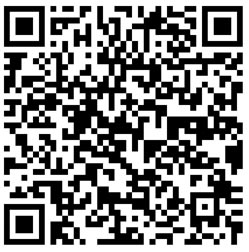
Inquadra il QR code oppure visita dal tuo smartphone il
sito
mylotteries.it
Inquadra il QR code con il tuo smartphone per aprire il sito
da mobile.
Inquadra il QR code con il tuo smartphone per aprire il sito
da mobile.
Come installare l'app
Come installare l'app
1Visita il sito
mylotteries.it
dal cellulare e premi il pulsante
SCARICA PER ANDROID
2Ti verrà chiesto di scaricare il file
MyLotteries.apk
premi il pulsante
SCARICA*
3Una volta scaricato il file premi il pulsante
APRI e infine
INSTALLA
*Se non hai mai scaricato un'app al di fuori del Play
Store vai su
IMPOSTAZIONI > SICUREZZA
del tuo smartphone e controlla che la voce
"Sorgenti sconosciute"
sia
ATTIVA
La tua esperienza di gioco in mobilità e in tutta sicurezza.
Con App My Lotteries puoi vivere la tua esperienza a
Lotto,
10eLotto,
MillionDay e
Gratta e Vinci
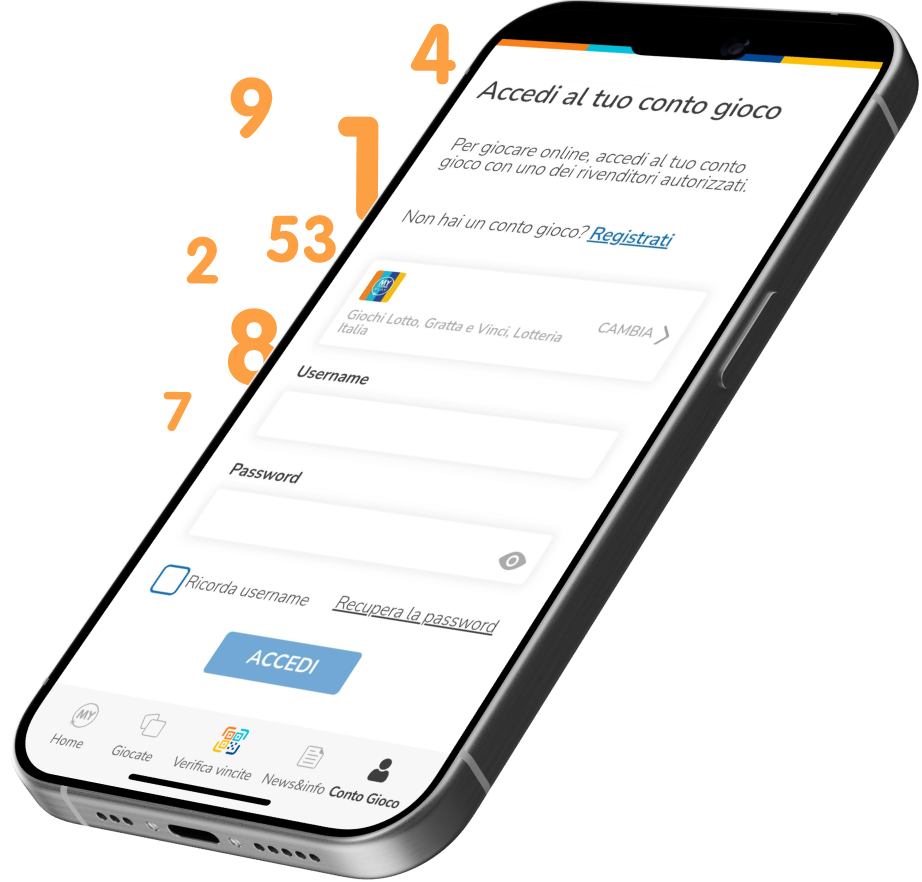
direttamente dal tuo smartphone dove e quando vuoi. Puoi
verificare se la tua giocata è vincente, compilare comodamente
la tua schedina in app e giocarla nel punto vendita, consultare
in qualsiasi momento gli ultimi numeri estratti nella sezione
archivio delle estrazioni e giocare online.
Con l’App My Lotteries puoi controllare se hai vinto semplicemente
inquadrando il biglietto Gratta e Vinci e lo scontrino del 10eLotto,
Lotto e MillionDAY nella sezione Verifica Vincite.
Facebook Stories Viewer High Quality -
From a technical and business perspective, the viewer list is a goldmine for Meta, Facebook’s parent company. The data generated—who watches what, for how long, and in what order—feeds sophisticated algorithms that refine ad targeting and content ranking. When a user appears high on your viewer list, it is often because the algorithm has predicted a meaningful relationship. This design keeps users trapped in a loop: you watch stories to see who is watching you back, generating endless engagement and screen time.
However, this feature is not without its critics. Psychologists have noted that the public nature of story viewing can amplify social anxiety and FOMO (Fear Of Missing Out). For teenagers and young adults, the discrepancy between a high view count and low direct interaction (likes or comments) can lead to feelings of invisibility. Conversely, the absence of a specific person from the list can trigger obsessive speculation: Did they see it and choose not to react? Or are they simply busy? The viewer list, in this sense, weaponizes ambiguity, turning a simple content update into a source of emotional turmoil. facebook stories viewer
Initially, the function of the Stories viewer seems purely utilitarian: it confirms that your content was seen. Yet, its implications run far deeper. For the poster, the list becomes a real-time social barometer. A high view count validates relevance, while a low one can sting with perceived rejection. The order of viewers is particularly telling; those who interact with your content most frequently—through likes, comments, or profile visits—appear at the top. This means that an ex-partner, a boss, or a close friend who repeatedly checks your story will be visibly elevated, turning an anonymous view into a semi-public act of attention. From a technical and business perspective, the viewer
For the viewer, the list creates a new layer of self-consciousness. Unlike a "Like" button, which requires active affirmation, viewing a story is often presumed to be passive and secret. However, the existence of the viewer list shatters this illusion. Scrolling through a friend’s vacation photos or an acquaintance’s political rant leaves a traceable digital footprint. This awareness has spawned a modern etiquette: the unspoken rule of not viewing an ex’s story too frequently (lest you appear obsessed) or the deliberate act of viewing a crush’s story first to signal interest. The "Facebook Stories Viewer" thus turns mere looking into a non-verbal language of social signaling. This design keeps users trapped in a loop:
In the ephemeral landscape of social media, the "Facebook Stories Viewer" list has become a quiet yet powerful digital phenomenon. Introduced in 2017 as Facebook’s answer to Snapchat and Instagram’s success, the Stories format allows users to post photos and videos that vanish after 24 hours. At the heart of this feature lies a simple but psychologically complex tool: the viewer list. This ranked roster of usernames—ordered not chronologically but by an algorithm prioritizing engagement and interaction—transforms passive content consumption into a theater of social surveillance.
In conclusion, the "Facebook Stories Viewer" is far more than a mundane feature of a social media platform. It is a mirror reflecting contemporary social dynamics—a space where attention is quantified, relationships are algorithmically ranked, and the simple act of looking has been redefined as a form of communication. While it offers creators the thrill of instant feedback and connection, it also imposes a subtle burden of surveillance on every user. As social media continues to evolve, the viewer list stands as a reminder that in the digital age, to see and to be seen are never passive acts; they are deliberate, recorded, and deeply meaningful.
From a technical and business perspective, the viewer list is a goldmine for Meta, Facebook’s parent company. The data generated—who watches what, for how long, and in what order—feeds sophisticated algorithms that refine ad targeting and content ranking. When a user appears high on your viewer list, it is often because the algorithm has predicted a meaningful relationship. This design keeps users trapped in a loop: you watch stories to see who is watching you back, generating endless engagement and screen time.
However, this feature is not without its critics. Psychologists have noted that the public nature of story viewing can amplify social anxiety and FOMO (Fear Of Missing Out). For teenagers and young adults, the discrepancy between a high view count and low direct interaction (likes or comments) can lead to feelings of invisibility. Conversely, the absence of a specific person from the list can trigger obsessive speculation: Did they see it and choose not to react? Or are they simply busy? The viewer list, in this sense, weaponizes ambiguity, turning a simple content update into a source of emotional turmoil.
Initially, the function of the Stories viewer seems purely utilitarian: it confirms that your content was seen. Yet, its implications run far deeper. For the poster, the list becomes a real-time social barometer. A high view count validates relevance, while a low one can sting with perceived rejection. The order of viewers is particularly telling; those who interact with your content most frequently—through likes, comments, or profile visits—appear at the top. This means that an ex-partner, a boss, or a close friend who repeatedly checks your story will be visibly elevated, turning an anonymous view into a semi-public act of attention.
For the viewer, the list creates a new layer of self-consciousness. Unlike a "Like" button, which requires active affirmation, viewing a story is often presumed to be passive and secret. However, the existence of the viewer list shatters this illusion. Scrolling through a friend’s vacation photos or an acquaintance’s political rant leaves a traceable digital footprint. This awareness has spawned a modern etiquette: the unspoken rule of not viewing an ex’s story too frequently (lest you appear obsessed) or the deliberate act of viewing a crush’s story first to signal interest. The "Facebook Stories Viewer" thus turns mere looking into a non-verbal language of social signaling.
In the ephemeral landscape of social media, the "Facebook Stories Viewer" list has become a quiet yet powerful digital phenomenon. Introduced in 2017 as Facebook’s answer to Snapchat and Instagram’s success, the Stories format allows users to post photos and videos that vanish after 24 hours. At the heart of this feature lies a simple but psychologically complex tool: the viewer list. This ranked roster of usernames—ordered not chronologically but by an algorithm prioritizing engagement and interaction—transforms passive content consumption into a theater of social surveillance.
In conclusion, the "Facebook Stories Viewer" is far more than a mundane feature of a social media platform. It is a mirror reflecting contemporary social dynamics—a space where attention is quantified, relationships are algorithmically ranked, and the simple act of looking has been redefined as a form of communication. While it offers creators the thrill of instant feedback and connection, it also imposes a subtle burden of surveillance on every user. As social media continues to evolve, the viewer list stands as a reminder that in the digital age, to see and to be seen are never passive acts; they are deliberate, recorded, and deeply meaningful.