







React Logo

By Addy Osmani and Hassan Djirdeh

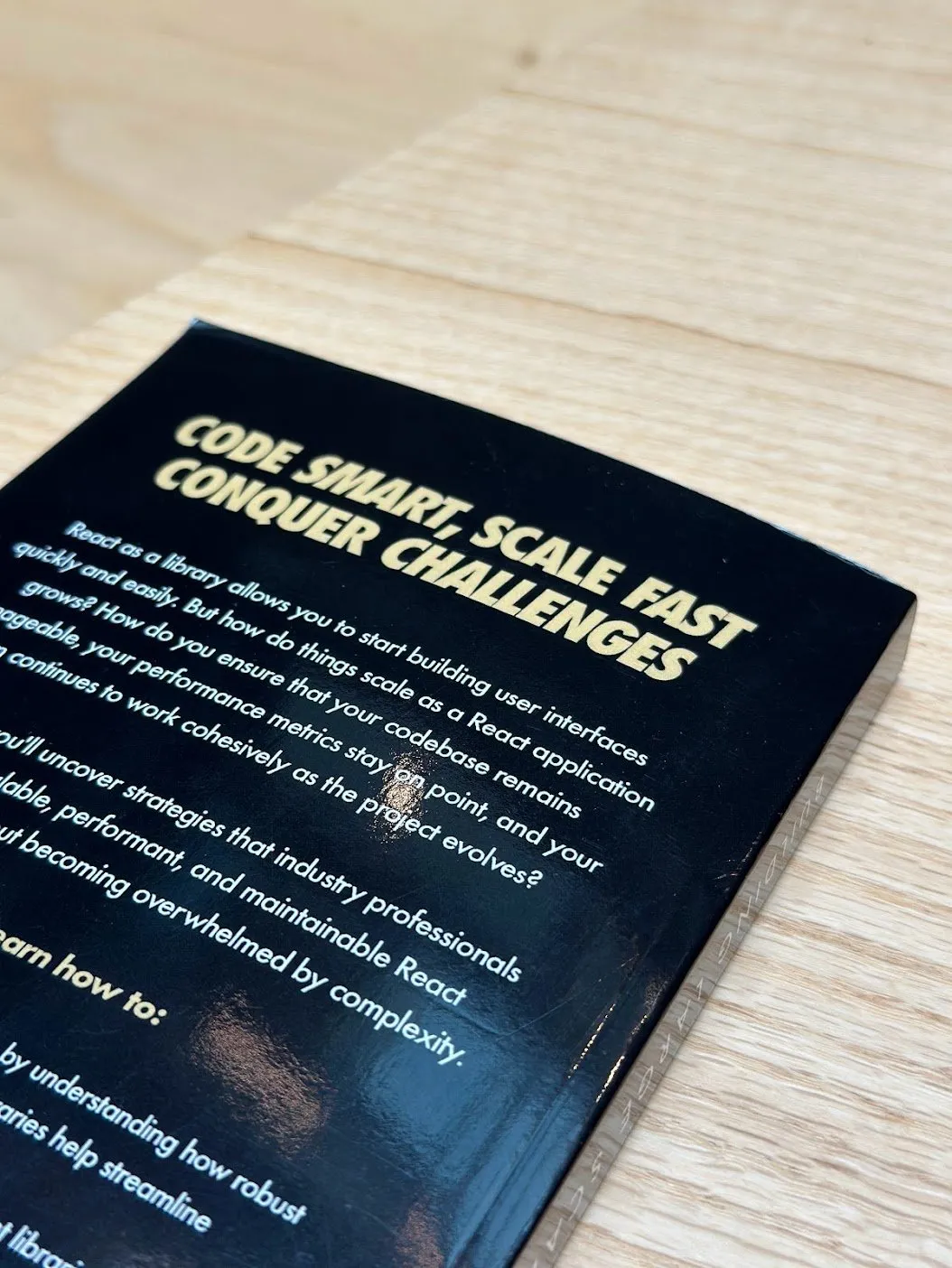
Code Smart, Scale Fast, Conquer Challenges

Learn tools and techniques to build and maintain large-scale React web applications.

Or  for free.
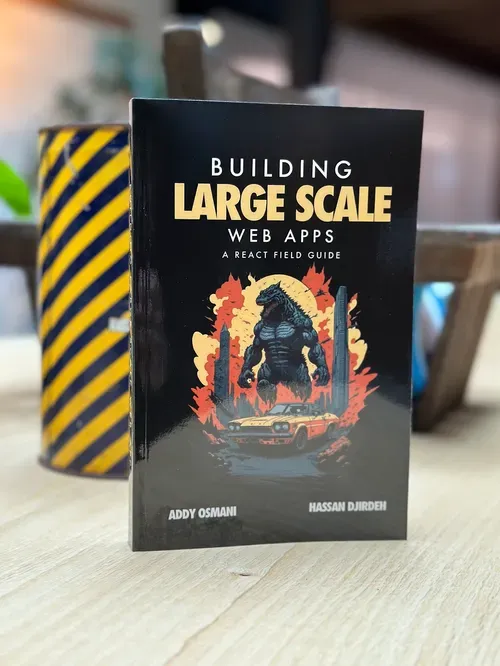
Building Large Scale Web Apps: A React Field Guide. By Addy Osmani and Hassan Djirdeh

“Building Large Scale Web Apps” is a toolkit to managing large-scale React applications.

React as a library allows you to start building user interfaces quickly and easily. But how do things scale as an application grows? How do you ensure that your codebase remains manageable, your performance metrics stay on point, and your team continues to work cohesively as the project evolves?

In this book, you'll uncover strategies that industry professionals use to build scalable, performant, and maintainable React applications, all without becoming overwhelmed by complexity.

Together, we've spent well over two decades building within or consulting for

The Google logo.
The Doordash logo.
The Instacart logo.
The Netflix logo.
The X logo.
The YouTube logo.
The Shopify logo.
The Ebay logo.

In the turbulent transition between the medieval and the modern, few figures embody the contradictions of 15th-century Spain as completely as Don Íñigo López de Mendoza, the first Marquess of Santillana (1398–1458). A formidable nobleman who never lost a battle and a refined poet who never abandoned his classical muses, Santillana stands as a colossus bridging the gap between the troubadour’s lute and the Renaissance scholar’s library. His legacy is not merely that of a warrior or a writer, but of a cultural architect who proved that intellectual refinement could coexist with feudal power.

To understand Santillana, one must first understand the violent chessboard of Castilian politics. As a powerful member of the Mendoza clan, he was a key player in the civil wars and regencies that plagued the reign of John II. Unlike the stereotypical illiterate knight, however, Santillana wielded his influence through humanist subtlety. He was a master of political alliances, using marriage and military force to expand his lordship, yet he dedicated his leisure hours to amassing one of the most impressive libraries in Europe. He was a patron who commissioned translations of Virgil, Dante, and Petrarch, introducing the dolce stil novo (sweet new style) to the Iberian Peninsula. In Santillana, the armor of the soldier did not constrain the hand of the scribe; rather, it protected it.

Literarily, Santillana’s genius lies in his synthesis of three distinct traditions. First, he mastered the native cancionero (songbook) poetry, composing serranillas —charming, bucolic poems about encounters between knights and mountain women—that breathed fresh life into the pastoral genre. Second, he looked to Provence, adopting the complex allegories of the troubadours. But his most revolutionary contribution was his third influence: the Italian Renaissance. His sonnets, modeled explicitly on Petrarch, are the first true Italianate sonnets in the Spanish language. By translating the Commedia and imitating the sonnet form, Santillana planted the seeds that would flower a century later in the poetry of Garcilaso de la Vega and Juan Boscán. He did not just write poetry; he wrote the manual for how Spain would learn to write poetry in the modern era.

Beyond his verses, Santillana’s prose works reveal a critical mind far ahead of his time. His Prohemio e carta al Condestable de Portugal (Prologue and Letter to the Constable of Portugal) is arguably the first work of literary criticism in Spanish. In this letter, he attempts to classify the history of poetry, distinguishing between divine, human, and bestial forms of verse. He dares to question the rigid medieval hierarchy that dismissed vernacular literature as inferior to Latin, arguing with genuine insight about the rhythmic soul of the common tongue. He was, in essence, the first Spanish writer to ask why we write, not just how .

Some other things!

Descriptive content, continous updates, and soundbites from industry professionals.

Descriptive, not prescriptive

When explaining content, we follow a descriptive approach, not prescriptive. In other words, we don’t tell you what specific tools or libraries you have to use to be successful. Rather, we focus on explaining a concept and employ certain libraries or tools to illustrate that concept.

React-focused with universal concepts

While the book is React-focused, it teaches universal concepts that transcend all web development frameworks. It's designed to enhance your understanding of building web applications that are scalable, maintainable, and adaptable, regardless of the specific technology stack.

Continous, frequent updates

Purchasing the e-book gives you access to all new content, edits, and improvements forever. In fact, we're currently working on adding three new chapters soon — Routing, User-centric API design, and React in 2024. Check out the Changelog to follow along on all the updates we'll make.

Soundbites from industry professionals

In the book, we share soundbites and thoughts from industry professionals. These soundbites are shared from start-up owners and software engineers who work at Doordash, Netflix, Spotify, and more.

Back cover of physical book
Front cover of physical book
Back cover of physical book
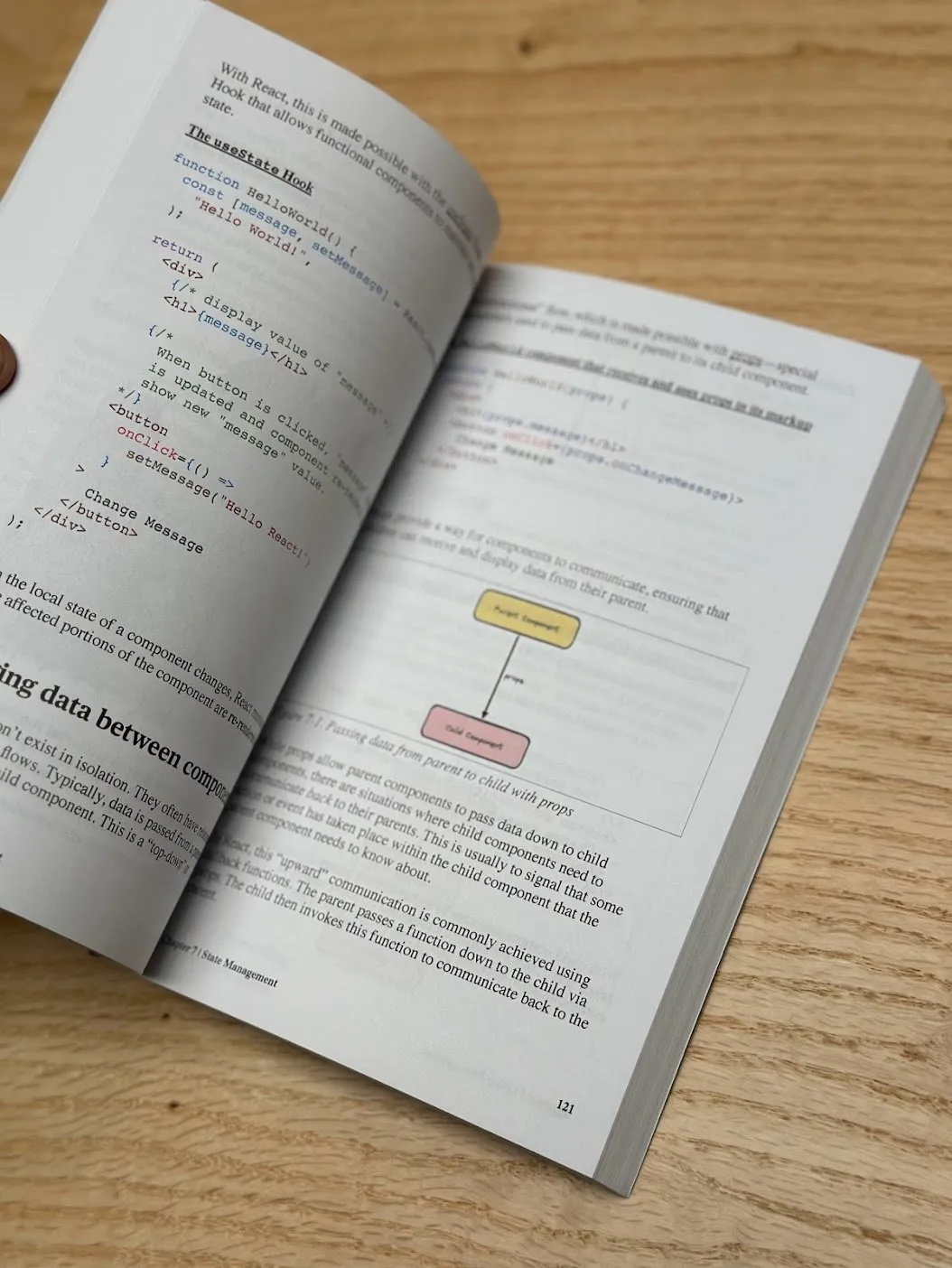
Contents of physical book

Industry nuggets

Nuggets of wisdom from industry professionals

Jem Young

Maxi Ferreira

Emma Bostian

Zeno Rocha

Francine Navarro

Jeffrey Peng

And others!

Av Santillana -

In the turbulent transition between the medieval and the modern, few figures embody the contradictions of 15th-century Spain as completely as Don Íñigo López de Mendoza, the first Marquess of Santillana (1398–1458). A formidable nobleman who never lost a battle and a refined poet who never abandoned his classical muses, Santillana stands as a colossus bridging the gap between the troubadour’s lute and the Renaissance scholar’s library. His legacy is not merely that of a warrior or a writer, but of a cultural architect who proved that intellectual refinement could coexist with feudal power.

To understand Santillana, one must first understand the violent chessboard of Castilian politics. As a powerful member of the Mendoza clan, he was a key player in the civil wars and regencies that plagued the reign of John II. Unlike the stereotypical illiterate knight, however, Santillana wielded his influence through humanist subtlety. He was a master of political alliances, using marriage and military force to expand his lordship, yet he dedicated his leisure hours to amassing one of the most impressive libraries in Europe. He was a patron who commissioned translations of Virgil, Dante, and Petrarch, introducing the dolce stil novo (sweet new style) to the Iberian Peninsula. In Santillana, the armor of the soldier did not constrain the hand of the scribe; rather, it protected it. av santillana

Literarily, Santillana’s genius lies in his synthesis of three distinct traditions. First, he mastered the native cancionero (songbook) poetry, composing serranillas —charming, bucolic poems about encounters between knights and mountain women—that breathed fresh life into the pastoral genre. Second, he looked to Provence, adopting the complex allegories of the troubadours. But his most revolutionary contribution was his third influence: the Italian Renaissance. His sonnets, modeled explicitly on Petrarch, are the first true Italianate sonnets in the Spanish language. By translating the Commedia and imitating the sonnet form, Santillana planted the seeds that would flower a century later in the poetry of Garcilaso de la Vega and Juan Boscán. He did not just write poetry; he wrote the manual for how Spain would learn to write poetry in the modern era. In the turbulent transition between the medieval and

Beyond his verses, Santillana’s prose works reveal a critical mind far ahead of his time. His Prohemio e carta al Condestable de Portugal (Prologue and Letter to the Constable of Portugal) is arguably the first work of literary criticism in Spanish. In this letter, he attempts to classify the history of poetry, distinguishing between divine, human, and bestial forms of verse. He dares to question the rigid medieval hierarchy that dismissed vernacular literature as inferior to Latin, arguing with genuine insight about the rhythmic soul of the common tongue. He was, in essence, the first Spanish writer to ask why we write, not just how . To understand Santillana, one must first understand the

Who we are

Heyo! We're Addy & Hassan — Engineers & Educators.

Profile picture of Addy Osmani

AddyOsmani

I'm an engineering leader working on Google Chrome and I lead up Chrome's Developer Experience organization, helping reduce the friction for developers to build great user experiences.

HassanDjirdeh

I'm a senior software engineer and have built large production web applications at organizations like Doordash, Instacart, and Shopify.

Profile picture of Addy Osmani

Pick your package

“Building Large Scale Web Apps” is available in either an e-book or as a physical copy.

E-book

Great for digital learners.

$24.99USD

  • 300+ pages
  • PDF or EPub (or both)
  • All future updates
Buy with Leanpub Or buy with Apple Books or Google Play

Physical copy (softcover)

Perfect for hands-on referencers.

$49.99USD

  • 300+ pages
  • Softcover
  • Something to put on your bookshelf
  • Interested in both the e-book and physical copy? Purchase both separately!
Buy Physical Copy

Some words from readers

Here are some things we've been hearing from our readers.

FAQ

Got questions? We've got answers.